
Lean Manufacturing Automation Solutions UK
Lean manufacturing and automation are a natural partnership. Together, they eliminate waste, improve flow, and maximise production efficiency. At Position Automation, every system we design is built with lean principles at its core – reducing unnecessary handling, minimising downtime, and delivering measurable output gains. Furthermore, our bespoke approach ensures every solution fits your factory, your processes, and your lean goals precisely.
What Is Lean Manufacturing Automation?
Lean manufacturing automation combines the principles of lean production – eliminating waste – with intelligent automated systems. Therefore, every unnecessary manual step, handling movement, and waiting time is identified and removed. As a result, production flows faster, more consistently, and at lower cost. Furthermore, automated systems maintain lean standards continuously, including during overnight and lights out operation.
The Seven Wastes and How Automation Addresses Them
Lean manufacturing identifies seven categories of waste – overproduction, waiting, transport, over-processing, inventory, motion, and defects. Therefore, automation directly addresses each one. For example, automatic feeding eliminates unnecessary transport. Furthermore, ERP integration eliminates over-processing by ensuring machines receive accurate job data directly. As a result, every cycle adds value – and nothing else.
Stabilise Before You Automate
The most common mistake manufacturers make is automating an unstable process. Therefore, establishing a reliable operational baseline is essential before introducing automation. Furthermore, our engineering team always begins with a full site assessment – mapping current workflows, identifying instability, and recommending the right sequence for automation integration. As a result, every system we commission builds on a solid lean foundation.
Lean Automation in Practice – Position Automation Case Studies
Our lights out aluminium processing machine for Swegon UK eliminated nine manual handling steps in a single automated cycle. Furthermore, our automatic drilling and tapping system for a fencing manufacturer reduced a 35-minute manual task to minutes. As a result, both clients achieved significant lean gains – faster throughput, less waste, and lower labour dependency – within the first weeks of operation.
FAQ
Q: Do I need to implement lean manufacturing before automating?
A: Yes. Stabilising your processes first ensures automation delivers its full potential rather than speeding up existing inefficiencies.
Q: How does automation support lean manufacturing goals?
A: Automation eliminates manual handling, reduces variation, and enables continuous production – directly addressing all seven lean waste categories.
Q: Where should I start with lean manufacturing automation?
A: Start with a site visit. Our engineers identify the highest-impact opportunities and recommend a practical, phased approach.
Punching, Drilling & Cutting in One Cycle
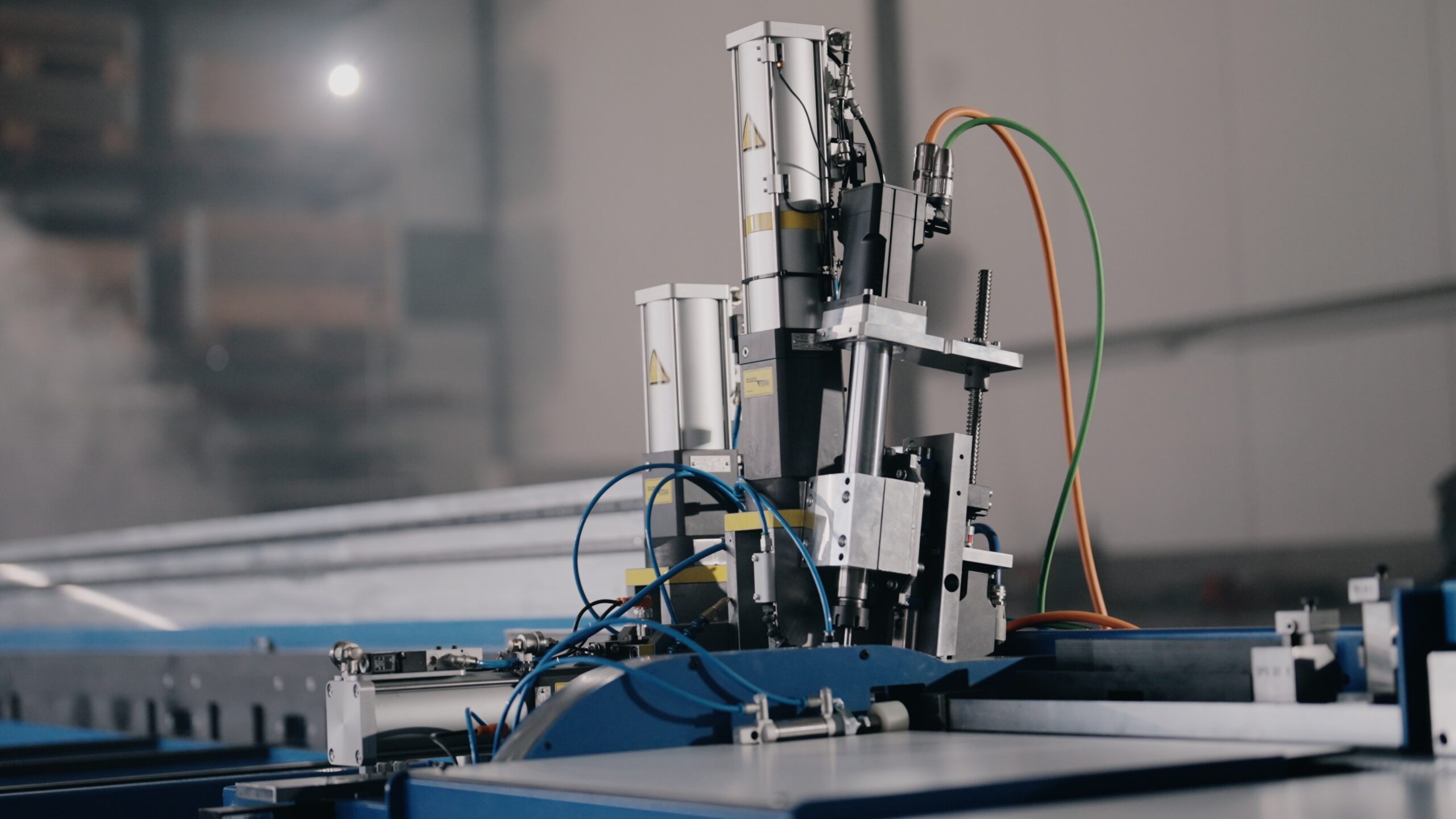
This advanced machine features a pusher system that handles punching, drilling, and cutting in a single automated cycle-perfect for aluminum, plastic, or steel profiles.
Whether you’re scaling production or streamlining operations, this machine is built to deliver speed, accuracy, and lights-out capability.
Conclusion
Lean manufacturing automation is the most powerful route to a smarter, more efficient UK factory. Contact Position Automation today and let our engineering team design a lean automation solution built specifically around your production goals.
