
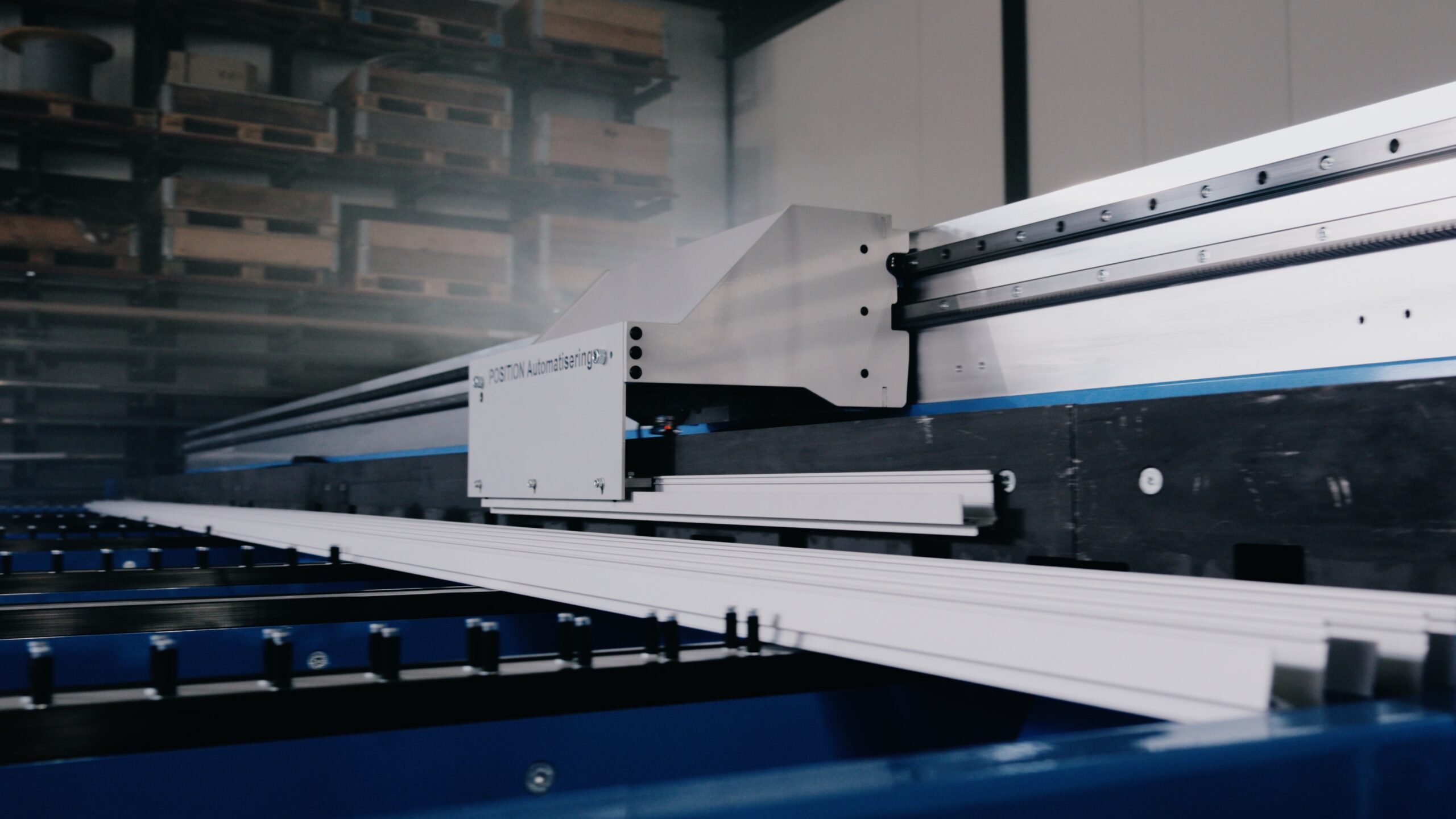
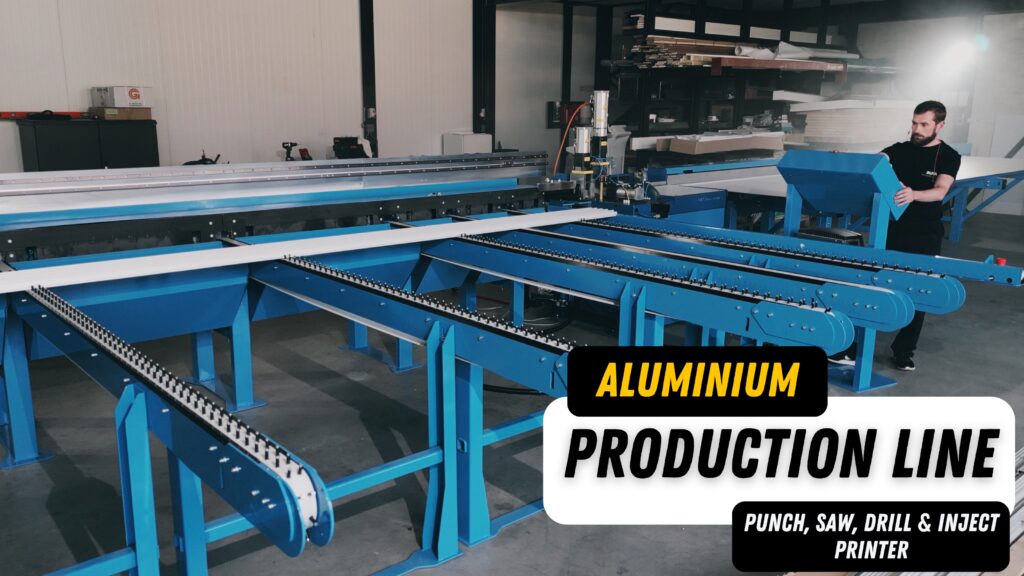
Aluminium Production Line
(Punch, Saw, Drill & Inject Printer)
Introduction
The Aluminium Production Line from Position Automation is a fully integrated solution engineered to transform aluminium processing operations. Combining high-speed punching, sawing, drilling, and part printing within a smart pushing and scrap handling system, it’s designed to deliver unmatched efficiency, precision, and traceability across manufacturing environments – whether you’re producing window trims, or modular enclosures, grilles, louvres, etc.
Product Details
System Highlights:
1.Pushing System: Automates material loading with precision alignment and adaptive motion control.
2.Punching Unit: Fast, versatile punching with robust tooling for varied hole sizes and positions with poke-yoke tool change.
3.Sawing Unit: Angle-adjustable cutting for custom profile requirements with integrated safety mechanisms.
4.Drilling Unit: High-precision multi-axis drilling with automated depth control.
Inject Printer: Real-time part marking for tracking, labelling, and inventory control.
Industries Served:
1.Aluminium extrusion and structural metal fabrication
2.uPVC and window profile production
3.HVAC housing, duct frame, grille, and louvre manufacturing
4.Automotive body frame and trim fabrication
5.Industrial enclosures and lightweight framing systems
What We Solved
Before implementing this system, manufacturers often faced:
a.Outdated punching of cutting machines with high maintenance cost
b.High labour dependency and manual handling errors
c.Inconsistent hole placement and inaccurate cutting
d.Limited traceability due to lack of inline part marking
e.Limited space due to having too many machines for one product processing
These challenges led to production delays, rejected parts, and operational inefficiencies – especially in high-volume environments.
What We Delivered
With our integrated Aluminium Production Line, clients achieved:
1.60% improvement in processing speed
2.Up to 35% improvement in cutting and hole placement precision
3.Built-in printing for better part traceability and order accuracy
4.Automated workflows with minimal operator intervention
5.Reduction of outdated machines (at least 6 machines)
These gains not only improve production but also support scalability and consistent quality across product lines.
